
Florida History Network - Your one-stop source for celebrating and preserving Florida's past, today
  • Home
  • Florida History Today
    • TB Times: St. Augustine coming to grips with civil rights history
    • Strawberry Festival organizers collecting material for new history book
    • Tarpon Springs' Greektown added to National Register as Traditional Cultural Property
    • Volunteers begin cleanup of historic Ocala cemetery
    • Jax museum presents 'Megalodon,' biggest-ever shark
    • Proposed museum switch generates anger in St. Pete
    • Report: Ocala's original cemetery lying in ruins
    • Rock and Roll Hall of Fame seeking camera-wielding Elvis fans
    • Service of Florida Jews in World War II focus of new WLRN doc
    • Seventeen honored for Big Bend preservation efforts
    • Long dresses, long pants, no shorts: Life before AC was uncool
    • Sunken shipwrecks are being turned into "parks" off Florida coast
    • Run-down Dunedin hotel to be rebuilt in same architectural style
    • Painting at Ringling Museum leads scholar to discover slavery roots of Spanish painter Juan de Pareja
    • Hampton Inn in downtown Bradenton gets state historic preservation award
    • Civil War re-enactment draws criticism in Holly Hill
    • New documentary spotlights Anna Maria Historic Green Village
    • Tampa-area NAACP launching effort to save historic rooming house
    • Ride on "America's Movie Train" this weekend in Ocoee, Winter Garden
    • Tampa's historic Kress building set for reimagination
    • 67-year-old shipwreck off Florida identified
    • Florida History Today - Project studies South Florida native communites
    • Florida History Today - Tarpon Springs halts Sponge Docks upgrades
    • Florida History Today - Compromise reached on Tequesta circles preservation
    • Florida History Today - Sears homes remembered in Sanibel
  • On this day in Florida history - August
    • Aug. 15, 1887 - Eatonville becomes one of first all-black towns in U.S.
    • Aug. 13, 2004 - Hurricane Charley kicks off unusually active 'cane year
    • Aug. 12, 1981 - Developed in Boca Raton, first PC released by IBM
    • Aug. 11, 1987 - Santeria church vows to sacrifice animals despite Hialeah ban
    • Aug. 10, 1981 - Tragic discovery confirms death of missing Adam Walsh, 6
    • Aug. 9, 1956 - Reporters look down noses covering Elvis in Daytona Beach
    • Aug. 8, 1896 - Cross Creek, Yearling author Marjorie Kinnan Rawlings born
    • Aug. 6, 1868 - Great Seal of the State of Florida adopted by Legislature
    • Aug. 5, 1763 - Britain takes over Pensacola, expands slavery over two-decade Fla. rule
    • Aug. 4, 1842: U.S. gives free Florida land to settlers willing to fight Seminoles
    • Aug. 1, 1939 - Florida Highway Patrol formed; to begin with 60 troopers
  • On this day in Florida history - July
    • July 31, 1962 - Actor, tax evader Wesley Snipes born in Orlando
    • July 30, 1956: Delta Burke, star of tabloids and television, born in Orlando
    • July 28, 1896: With railroad into town, city of Miami incorporated
    • July 27, 1816: U.S. forces obliterate 300+ free blacks, Indians at 'Fort Negro'
    • July 26, 1876 - Daytona incorporated, named after founder Matthias Day
    • July 25, 1884 - St. Petersburg Times debuts as West Hillsborough Times
    • July 25, 1957 - Country star, actress Pam Tillis born in Plant City
    • July 23, 1836 - Cape Florida Lighthouse attacked by Seminoles
    • July 22, 1964 - First 536 home lots sold in new city of Coral Springs
    • July 21, 1821 - St. Johns and Escambia become first two Florida counties
    • July 20, 1969 - U.S. astronauts walk on the moon
    • July 19, 1952 - Skynyrd guitarist Allen Collins is born; stardom and tragedy await
    • July 18, 1940 - Winners of St. Pete mayor's safety slogan contest announced
    • July 17, 1821 - Spain officially transfers Florida to United States
    • July 16, 1943 - Former 'Canes, Dolphins, Cowboys coach Jimmy Johnson born
    • July 15, 1997 - Killer gigolo guns down Gianni Versace at South Beach mansion
    • July 14, 1921 - Florida's most famous 'cracker cowboy' dies at 58
    • July 13, 1927: Officials dump $250k in liquor into Gulf Stream
    • July 10, 1972 - First of two major party conventions opens in Miami Beach
    • July 9, 1957 - Pass-a-Grille and three other towns form St. Pete Beach
    • July 8, 2011 - Last space shuttle launched from Cape Canaveral
    • July 7, 1983 - 'Operation Everglades' drug bust rocks Everglades City
    • July 6, 2003 - 'Hillbillies' star Buddy Ebsen, raised in Orlando, dies at 95
    • July 5, 1928 - Elks begin arriving for 1st Florida national convention
    • July 4: Florida celebrates America's Independence Day
    • July 3, 1971 - Doors singer, Melbourne native Jim Morrison dies
    • July 2, 1961: Key West icon Ernest Hemingway dies; cats live on
    • July 1, 1951: St. Pete woman's burning death baffles investigators
  • On this day in Florida history - June
    • June 1, 1937 - Amelia Earhart leaves Miami to begin final voyage
    • June 2, 2008 - Bo Diddley, 79, dies at his home in Archer
    • June 3, 1961 - Arrest made in case that leads to 'right to an attorney'
    • June 4, 1939 - Jewish refugee ship turned away from Florida coast
    • June 5, 2013 - Zephyrhills woman, 84, claims $590 million Powerball jackpot
    • June 6, 1990 - Broward Judge rules 2 Live Crew album 'obscene'
    • June 7, 1928 - Two elections workers shot in Tampa ballot box heist
    • June 8, 1888 - First train rolls into terminus "St. Petersburg"
    • June 9, 1903 - Flagler's Breakers Hotel burns down in Palm Beach
    • June 10, 1991 - South Florida learns it will get new major league baseball team
    • June 11, 1953 - Sabal Palmetto palm becomes Florida's state tree
    • June 12, 1913: With first bridge, Miami Beach is open for business
    • June 13, 1974 - Askew appoints first female Cabinet member
    • June 14, 1966 - FSL's Miami and St. Pete set record for longest baseball game
    • June 15, 1822: City of Jacksonville founded, named after Andrew Jackson
    • June 16, 1955 - Judge Chillingworth and wife go missing
    • June 17. 1942 - German U-boat saboteurs land at Ponte Vedra Beach
    • June 18, 1983 - Sally Ride becomes first American woman in space
    • June 19, 1972 - Hurricane Agnes makes landfall in Panhandle
    • June 20, 2003 - Non-profit Wikipedia established in St. Petersburg
    • June 21, 1926 - Miami barbers don't want to be called 'chirotonsors'
    • June 22, 1990 - Florida bans thong bikinis in state parks
    • June 23, 1938 - Marine Studios, 'world's first oceanarium,' opens
    • June 24, 1987 - S. Fla's most famous resident, Jackie Gleason, dies at 71
    • June 25, 1981 - Dolphins QB Bob Griese retires after 14 seasons
    • June 26, 1964 - Governor orders extra police to riot-torn St. Augustine
    • June 27, 1964 - State tells Daytona: Stop price-gouging your tourists
    • June 28, 1911 - Big Cypress Indian Reservation created by President Taft
    • June 29, 1931 - Monticello hits 109 degrees -- hottest-ever for Florida
    • June 30, 1975 - Cher marries Daytona Beach's favorite son Gregg Allman
  • On this day in Florida history - May
    • May 1, 1562 - Jean Ribault arrives at St. Johns River, claims Florida for France
    • May 2, 1936 - Panama City Beach incorporated in Bay County
    • May 3, 1901 - Jacksonville burns to the ground
    • May 4, 1990 - Execution goes awry as flames, smoke shoot from head
    • May 5, 1961 - Alan Shepard becomes first American in space
    • May 6, 1965 - Rolling Stones play Clearwater, write 'Satisfaction' riff
    • May 7, 1940 - Voting machine shortages create long wait at polls
    • May 8, 1923 - Killings of work camp prisoners detailed in hearing
    • May 9, 1981 - Sinkhole swallows house, five Porsches in Winter Park
    • May 10, 1781 - Spanish Gen. Bernardo de Gálvez captures Pensacola
    • May 11, 1996 - ValuJet Flight 592 crashes into Everglades
    • May 12, 1997 - Tornado hits Miami, poses for photos, videos
    • May 13, 1955 - Jax fans chase Elvis after show, tear off his clothes
    • May 14, 1973 - Skylab launches new era of space study...and toys
    • May 15, 1947 - Florida State College for Women goes co-ed, renamed FSU
    • May 16, 1929 - Lake City mob lynches grocer after wife shoots chief
    • May 17, 1980 - Not guilty verdict triggers three days of rioting in Miami
    • May 18, 1955 - Educator Dr. Mary McLeod Bethune dies
    • May 19, 2004 - Drugstore chain owner Jack Eckerd dies at 91
    • May 20, 1913: Henry Morrison Flagler dies in his home at Palm Beach
    • May 21, 1956 - Police close beach after catching black, white teens talking
    • May 22, 1931 - Canned rattlesnake goes on sale from Arcadia
    • May 23, 1898 - School for Deaf & Blind issues first diplomas
    • May 24, 1931 - Writer develops Planet of the Apes storyline for Miami
    • May 25, 1961 - JFK challenges nation to land on moon within decade
    • May 26, 1845 - Florida holds first statewide election
    • May 27, 1965 - Mysterious land deal near Orlando revealed
    • May 28, 1935 - Now controversial "Old Folks At Home" becomes state song
    • May 29, 1967 - Woman jailed after 25 kids found in station wagon
    • May 30, 1989: Claude Pepper dies after 60 years of public service
    • May 31, 1539 - DeSoto comes to Florida, changes continent forever
  • On this day in Florida history - April
    • April 1, 1926 - Air Mail service begins in four Florida cities
    • April 2, 1513 - Juan Ponce de Leon lands in Florida
    • April 3, 2006 - Gators basketball team win first-ever national title
    • April 4, 1933 - NASCAR 2nd generation leader Bill France Jr. is born
    • April 5, 1925 - 'Great Miami Tornado' kills 5, destroys 250 homes
    • April 6, 1959 - Seminole Tribe votes to support building "Alligator Alley"
    • April 7, 1890 - Author, Everglades crusader Marjorie Stoneman Douglas born
    • April 8, 1923 - News of "lost" Tamiami trail blazers heats up
    • April 9, 1921 - Whites kicked out of West Palm Beach "colored" town
    • April 10, 1766 - John Bartram ends journey through Carolinas, Ga., Florida
    • April 11, 1986 - FBI shootout in Dade prompts cops' need for more powerful guns
    • April 12, 1981 - Space Shuttle launched for first time
    • April 13, 1951 - Marion County sheriff killed by forged check suspect
    • April 14, 1528 - Bumbling conqueror Pánfilo de Narváez lands near Tampa
    • April 15, 1896 - Henry Flagler's railroad arrives in Miami for first time
    • April 16, 1915 and 1917 - Aviation takes two steps forward
    • April 17, 1961 - U.S. launches failed Bay of Pigs invasion in Cuba
    • April 18, 1957 - Florida to U.S.: Integration ruling unconstitutional
    • April 19, 1930 - First Publix store incorporated in Winter Haven
    • April 20, 1967 - Orange Juice becomes official state beverage
    • April 21, 1924 - NY's infamous 'Bobbed Haired Bandit' caught in Jax
    • April 22, 2000 - Elian Gonzalez seized in raid, returned to Cuba
    • April 23, 1982 - Keys secede from Union, create Conch Republic
    • April 24, 1965 - Orlando honors hometown astronaut with John Young Day
    • April 25, 1966 - Gov. Haydon Burns says his plane trailed by UFO
    • April 26, 1920 - Crop shippers seizing ice, creating shortage
    • April 27, 1969 - 1,000 students help during FSU admin building fire
    • April 28, 1985 - World's tallest sand sculpture built at Treasure Island
    • April 29, 1980 - U.S. braces for magnitude of Mariel Boatlift
    • April 30, 1915 - Broward County created, named after former governor
  • Hontoon Changling: The ancient owl carving that represents the wrong tribe
  • The Fierce Competition for Rollins College
  • The Hidden History of Everglades City
  • The Legend of Jose Gaspar
  • Burdine's: Sunshine Fashions & The Florida Store
  • Follow the Dollar - Horse breeding brings big money to Central Florida
  • In Cassadaga, the Seance Room is where they talk to the dead
  • St. Petersburg leaders worked overtime to promote their city
  • Paradise for Sale: Florida's Booms and Busts
  • Feature - The Curtiss-Bright Cities
  • Feature - Collected Works of South Florida pioneer Byrd Spilman Dewey
  • Facebook links - Spring Breakers riot in Fort Lauderdale
  • Features Index
  • Secret Florida life of the author of one of SF's greatest novels
  • Casey Stengel was a Daytona Beach troublemaker
  • True stories about The Real McCoy
  • Daytona's Deadliest Air Crash: Aug. 10, 1937
  • Blog - Zora Neale Hurston's Life on Florida's East Coast
  • Blog - Florida's Worst Freezes
  • Blog - Washtub baths and pot-bellied stoves in 1930s Florida
  • Found on the Web
  • Florida History Videos
  • Historical societies and museums
  • Destinations - Central
  • Destinations - North
  • Destinations - South
  • Destinations - Southwest
  • Events - Fairs and Festivals
  • Events - Exhibits and Presentations
  • Florida history resources and links
  • Florida History Network - Announcements
    • Orange County History Center: 75th anniversary of Gone With The Wind
    • Adopt Your Duck at Dunedin History Museum
    • Mandarin Museum Welcomes Military Families as a Blue Star Museum
    • Orange County History Center seeking submissions for icons exhibition
    • Museum of Seminole County History announces Paranormal Tour
    • Florida Living History Inc. presents
    • Dunedin Museum Timeline - May 2014
    • School District of Palm Beach County - Hatian Heritage Month events planned
    • Fort Lauderdale Historical Society - launches effort to save 1905 New River Inn
    • Orange County Regional History Center honoring Judge Belvin Perry Jr. at John Young History Maker Awards
    • Fort Lauderdale Historical Society - New Exhibit shows how South Floridans Beat the Heat before AC
    • Orange County Regional History Center - Events and Exhbitions
    • Lake County Historical Society Grand Opening
    • Mandarin Historical Society - The Maple Leaf 150th Anniversary Exhibit
    • Miami Design Preservation League newsletter
    • Orange County Regional History Center events
    • Amelia Island Museum of History wants to show off your collection
    • Dunedin Museum Timeline
    • Amelia Island Museum of History's Patron Perks Tour Going to Sapelo Island, Georgia
    • Historical Society of Central Florida's honors Judge Belvin Perry Jr.
    • Orange County Regional History Center events
    • Debunking the Pocahontas Myth
    • King Cromartie House preservation
    • Feature - Mandarin Historical Society seeks help to save one-room schoolhouse
  • Preservation Projects
  • Business Directory
  • About/Contact Us
Picture

Harriet Tubman on Amelia Island
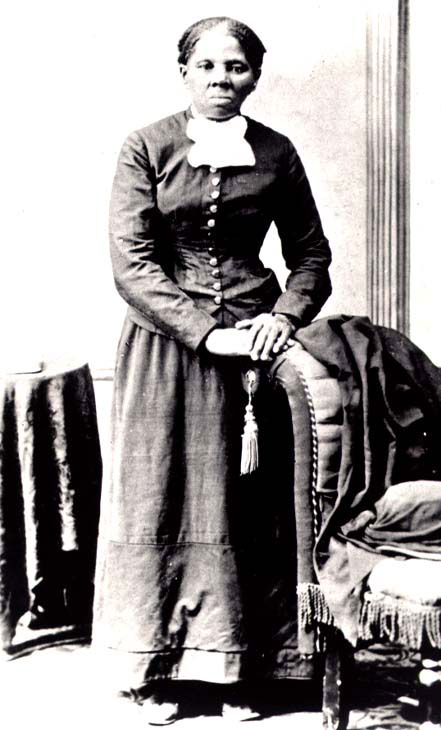
Harriet Tubman
By Gray Edenfield
Education Director
Amelia Island Museum of History


It’s hard to separate fact from fiction when it comes to many historical figures. Great people often make for great stories. As time goes on, small facts and details often become the casualties of a person’s mythic status.  Harriet Tubman’s mission to Fernandina is a perfect example. Known as, “the Moses of her people,” Tubman is an icon of American history, well remembered for her work with the Underground Railroad. But many people are not aware that leading slaves to freedom was only one of the ways that Harriet contributed to emancipation. She believed in the cause of freedom with total conviction, and was willing to do whatever was necessary to see the end of slavery during her lifetime, which led her to serve the Union Army in a variety of roles during the Civil War.

   Sometimes during the transition from living, breathing human-being to folk hero, a person’s actual deeds can get lost in the translation.  But if you push aside all the tall-tales and embellishments that have been tacked on to the story over the course of a century, in this case you will find a truly remarkable woman who was able to accomplish amazing feats in her lifetime, some of which are more famous than others.  

   In her authorized biography, Harriet mentions that during the Civil War, the Union commander of Amelia Island asked her to come to Fernandina to nurse Union soldiers through an outbreak of dysentery. The details of her time here elude us. We’re not certain if she attended to soldiers at Fort Clinch, or if she moved among the several batteries on the Island that were manned by African American soldiers, like Fort Naglee. Either or both is possible. But to put the significance of her journey here into context, it would help to have some understanding of the incredible life that she led.

   Araminta Harriet Tubman was born to enslaved parents in Bucktown, Maryland, sometime in the early 1820s. As a child, she was often hired out by her master to work for other families. Early in her teen years, Harriet suffered a head injury that would plague her for the rest of her life, causing seizures and sudden episodes of narcolepsy.

   Around 1844, Harriet married a free black man named John Tubman. In 1849, Harriet escaped alone to Philadelphia (her husband refused to join her), and began to plan trips back to Maryland to free members of her family and friends. Over the next eleven years she made more than a dozen trips back into Maryland, leading around 70 slaves to freedom, including her three brothers and much of their families. Tubman was also a friend and collaborator of abolitionist John Brown.

   During the Civil War, Tubman served the Union Army as a nurse, cook, spy and scout. She used her experience traveling in secret with the Underground Railroad to help the Union Army map unfamiliar terrain and gather reconnaissance. Tubman provided key intelligence that aided in the capture of Jacksonville, by Union forces in 1862. The war also brought Harriet Tubman to Amelia Island.  Harriet’s obituary, printed in the Auburn Citizen (the local newspaper in her adopted hometown of Auburn, NY) mentions that her success in curing dysentery with native herbs became so well known by army surgeons, the War Department sent her to Fernandina. 

   Unfortunately, this single statement recorded by Harriet’s friend and first biographer, Sarah H. Bradford, is all that we have to go on. Harriet didn’t elaborate any further on her time in Fernandina, but her presence here would make perfect sense given her activities from 1862-1864.
   We know that she was actively scouting in the area because of a letter written on her behalf by General David Hunter, which mentions her being in Beaufort, and Hilton Head, South Carolina. The letter named Harriet Tubman herself as its bearer, and guaranteed her passage on any government transport to go wherever she wished to go, and to take whatever goods she needed from the Dept. of the South commissary. The note also describes her as “a valuable woman.”

   Harriet’s skills as a healer are corroborated by Henry R. Durrant, an Assistant Surgeon in the US Army, who said: “I certify that I have been acquainted with Harriet Tubman for nearly two years, and my position as Medical officer in charge of ‘contrabands’ in this town, and in hospitals, has given me frequent and ample opportunity to observe her general deportment, particularly her kindness and attention to the sick and suffering of her own race. I take much pleasure in testifying hereby to the esteem in which she is generally held.”

   It is well documented that Tubman spent time attached to the 1st South Carolina Volunteers, the first African American unit to be mustered into the Union Army (later re-designated the 33rd United States Colored Troops). On January 26, 1863, the 1st South Carolina became the first African American troops to land on Amelia Island. 

   We do not know if Harriet came to Fernandina with the 1st South Carolina Volunteers or if she travelled here on her own – though it is believed she came here in 1863. There are diaries written by Union soldiers posted on the island at that time that give a passing mention of her arrival here. None of these contain any specifics about the time she spent here.

   One of the most frustrating parts of studying history is that we’re often left pining for more details. In the modern technological age, where people have become so accustomed to documenting every aspect of their day, we forget that people living in the times we study had wars to fight, families to protect, and lives to lead. Many things which seem so desperately important to us now would have been minutiae to them. We want to know everything we possibly can on a given subject, however sometimes the sources simply aren’t there to be found.

   Unfortunately, this is the case when it comes to Harriet Tubman’s time on Amelia Island. Do we know exactly where she ate, slept, and worked? No. 

   What we do know is that she was a woman of intense courage and dedication to the cause of freedom, and that she willingly took on whatever role was necessary to achieve emancipation. We also know that her work brought her here, and that small role in the nascence of freedom in this country is something that Fernandina can be proud of.

Gray Edenfield is Education Director for the Amelia Island Museum of History.
His blogs are reposted here by permission.
Read more of his Gray's blogs at [email protected]